Why Unique made
Low-key Kind
You notice someone.
Maybe you look for a second too long. Then look away.
Maybe your voice changes without you meaning it to. The head tilt. The soft smile. You wonder whether to help. Whether to say something. Whether saying nothing is worse.
You are trying to be kind.
And suddenly you are thinking very hard about something that, a few seconds ago, was just another person on the bus.
That was the bit we wanted to understand.
We spoke to families living with rare chromosome and gene disorders about those moments. Then we asked the public what was going through their head.
Families talked about the staring, the looking away, people speaking to the parent instead of the child, help arriving before anyone had asked for it, children being shushed for asking a question, everyone treading carefully and avoiding contact.
The public talked about worrying they would get it wrong.
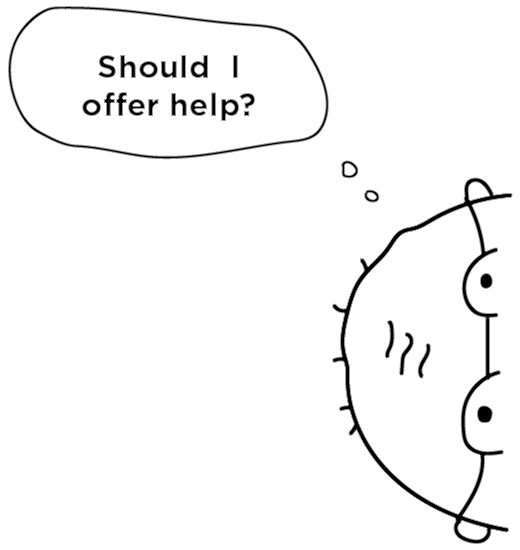
Should I look or look away? Say something or leave it? Offer help or wait to be asked? What if my child asks a question? What if I say the wrong thing?
One person put it plainly:
“I honestly keep my distance because I’m worried I’d do something more offensive and unhelpful.”
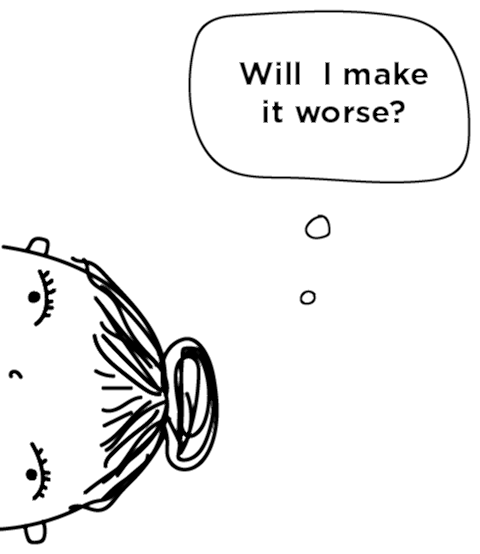
That matters, because this isn’t really a story about people not caring.
Most people do care.
It is what happens when caring gets tangled up with uncertainty.
And for families it doesn’t happen once. It happens on the bus, in the supermarket, at school, in a café, at the park. Tiny moments on their own. A lot of them over time.
The positive moments that families had experienced were all low-key.
Someone said hello. Someone included their child in the conversation. Someone asked before helping. Someone held the door and carried on. A child asked a question and their parent just answered it.
Nothing big happened.
That was enough.
These are the experiences of families Unique has supported since 1984.
Often, families find Unique after a doctor gives a diagnosis that they have never heard before. They write it down, look it up later, and there may be almost nothing there.
That’s where Unique comes in.
Who are Unique? We turn complicated medical information about rare chromosome and gene disorders into guides families can actually use and understand. They answer questions when there is nowhere else to go. And through our database and community, we can often connect a family with someone living with the same or a similar chromosome or gene change.
Some conditions have a lot known about them. Some have only a handful of families in the world. Sometimes finding one of those families is the most helpful thing that can happen.
But there is another part Unique can’t solve for them.
The bus. The café. The supermarket. The park.
The staring isn’t medical. Neither is the careful voice, the awkward pause or the stranger who means well and turns one small moment into a big one.
There is no guide we can hand a family to fix that, because the family isn’t the one who needs to change anything.
We made Low-key Kind because this bit belongs to everyone else.
Most campaigns ask for more. More awareness, more sympathy, more effort.
This one asks for less.
It isn’t asking anyone not to notice. It is asking us to make things better for families by doing less.
Because less isn’t nothing.
A room going quiet is still something happening.
Keep the kindness. Lose the extra.
Unique supports families living with rare chromosome and gene disorders with information, guides, answers and connections to other families.
Made with parents, by Tiny Force. This campaign has been supported by the JCDecaux Community Channel on digital Out-of-Home sites across the UK. Created pro bono.